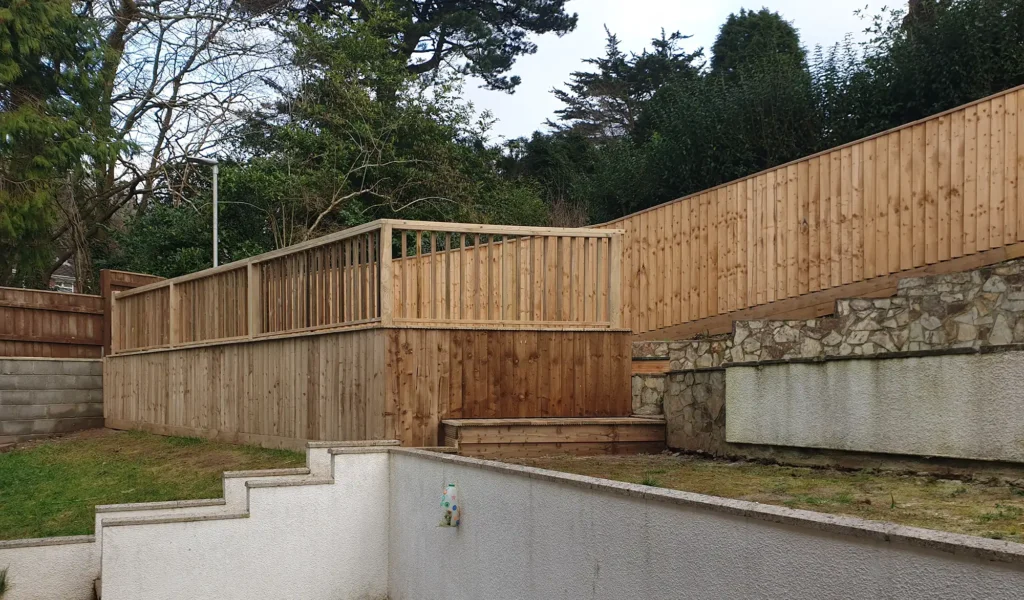
Sloping or uneven gardens are one of the most common reasons homeowners feel stuck. Lawns are hard to maintain, furniture never sits level, and large parts of the space often go unused. What looks like a problem on paper is usually an opportunity in disguise.
Raised decking is one of the most effective ways to turn awkward ground into something practical, attractive, and easy to live with.
Why Raised Decking Works So Well on Uneven Ground
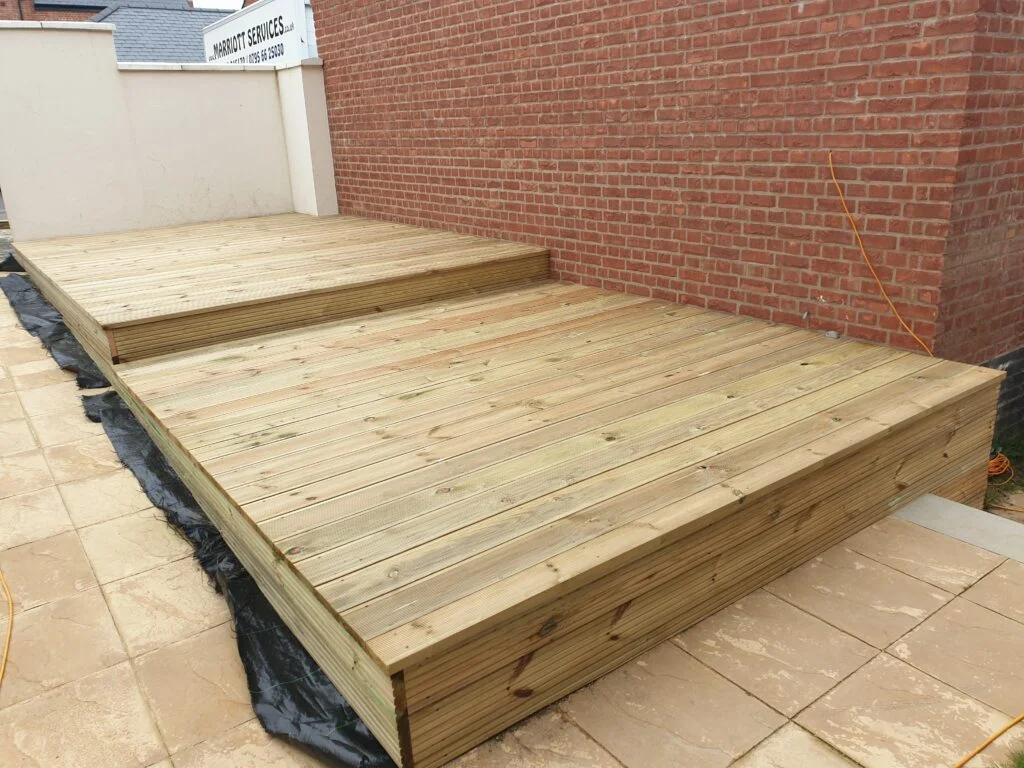
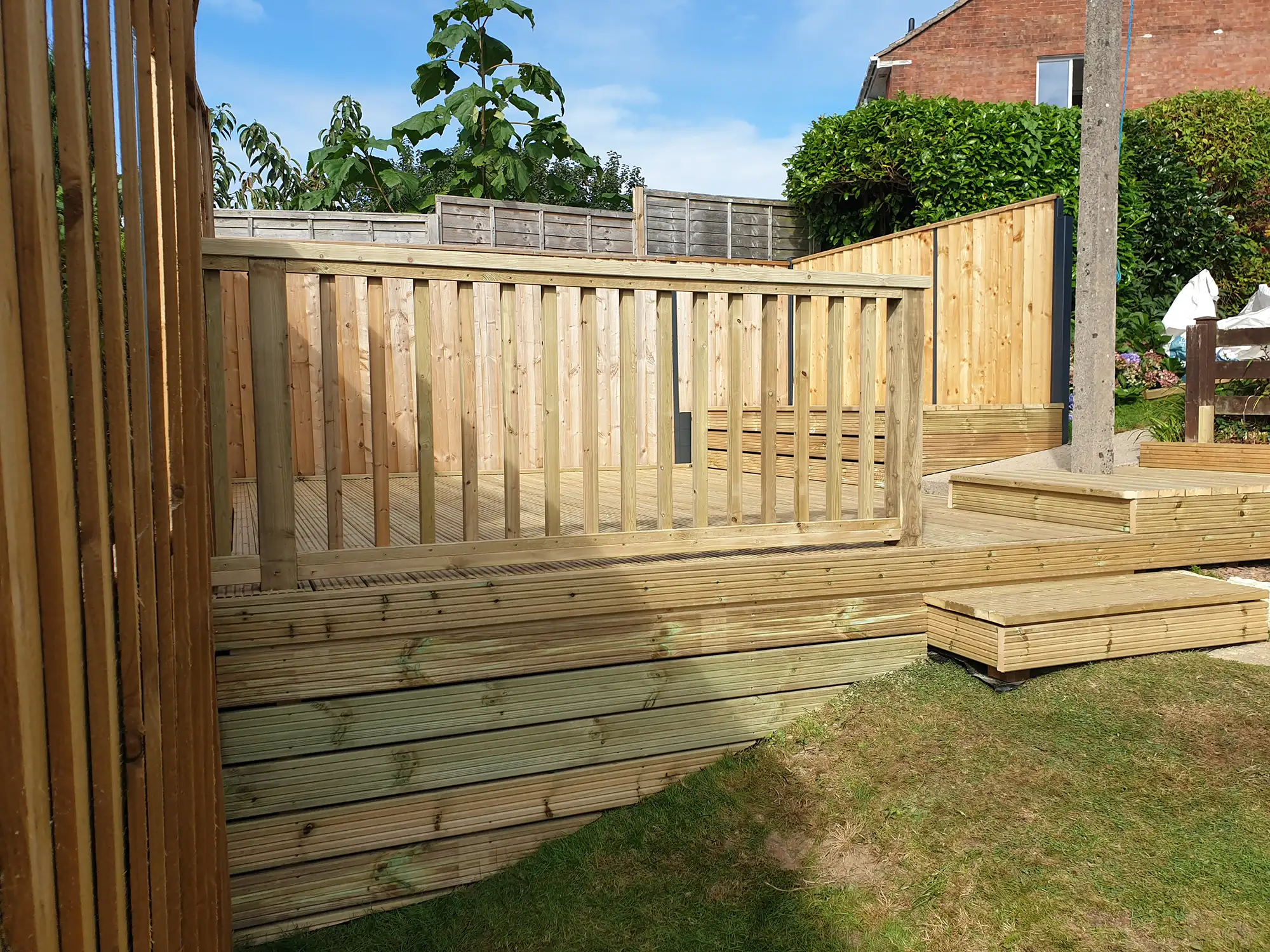
Unlike patios or paving, decking does not rely on perfectly level ground. A properly built subframe allows the deck to sit above the natural slope, creating a flat, stable surface without extensive excavation.
This keeps disruption to a minimum and avoids the cost and complexity of major groundwork. It also preserves natural drainage patterns rather than fighting against them.
For many gardens, especially those on a gradient, raised decking is the simplest and most cost effective solution.
Turning Slopes into Usable Space
One of the biggest advantages of raised decking is how much usable space it creates. Areas that were previously awkward or unsafe suddenly become places you can enjoy.
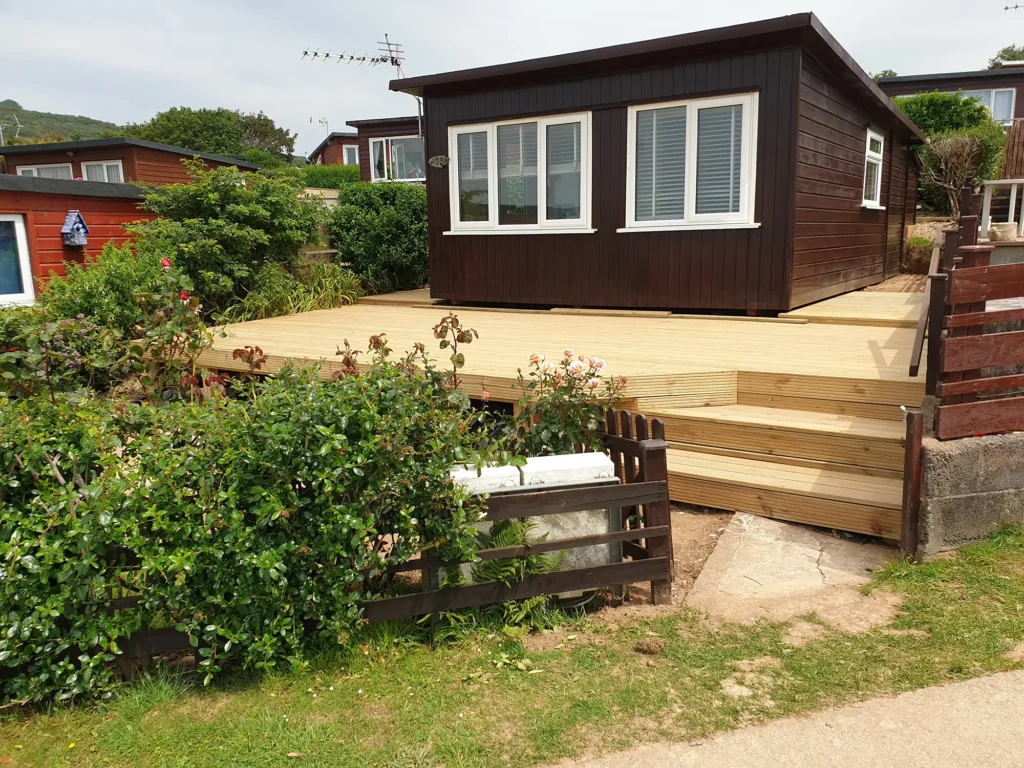
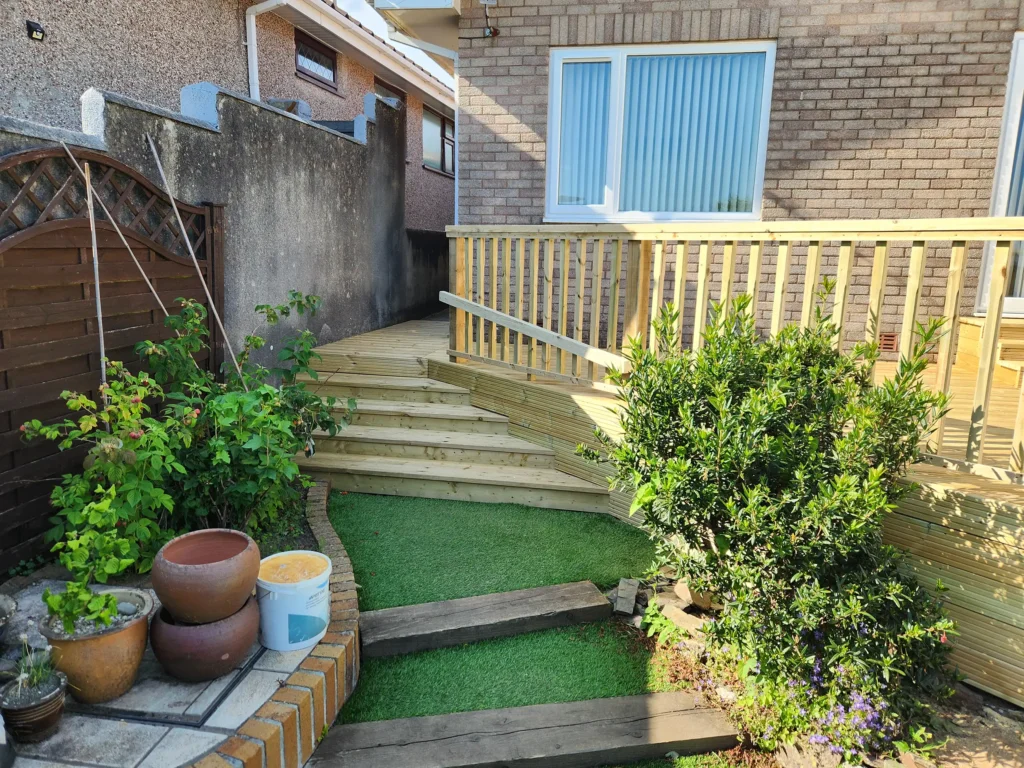
A raised platform can act as a dining area, a quiet seating spot, or a natural extension of the house. In steeper gardens, multi level decking allows you to break the slope into manageable sections, each with its own purpose.
Steps between levels help guide movement through the garden and can be designed wide enough to double as informal seating.
Making the Most of Height and Views
Sloping gardens often have better views than flat ones. Raised decking lets you take advantage of this.
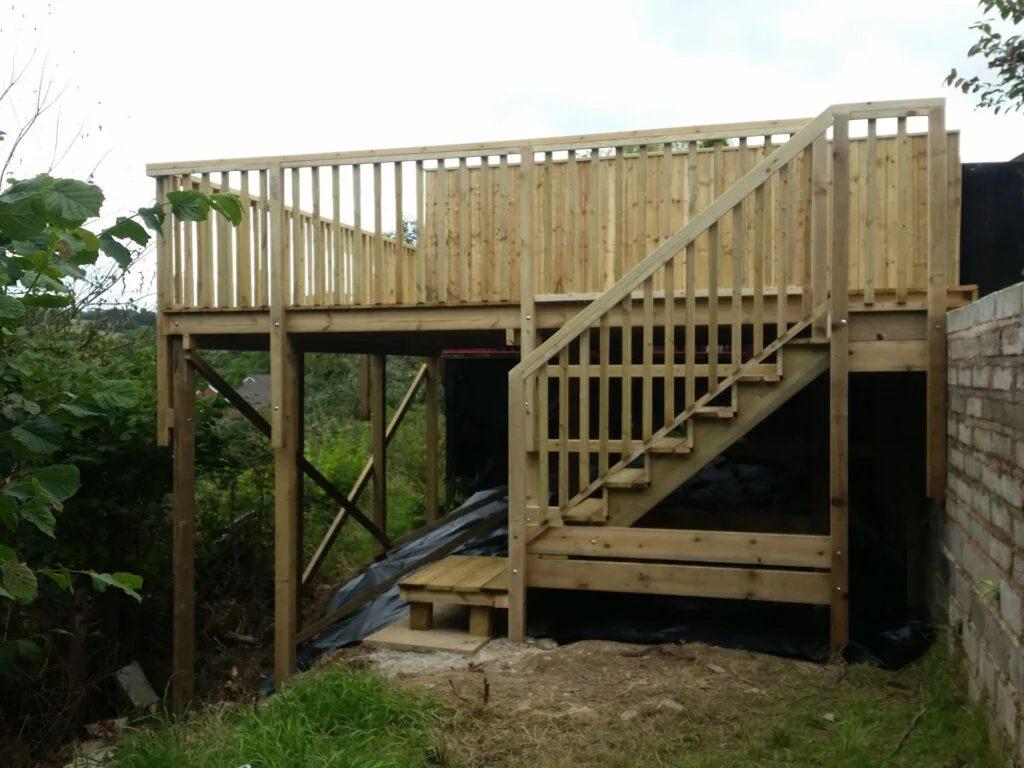
By lifting the main deck slightly above ground level, you can improve sight lines, catch more sunlight, and create a stronger connection with the surrounding space. Even a modest increase in height can make a garden feel more open and considered.
Balustrades, where needed, do not have to feel heavy or intrusive. Simple designs using timber or discreet railings keep the focus on the garden rather than the structure.
Storage Beneath Raised Decking
One benefit people often overlook is the space underneath.
Raised decks naturally create sheltered areas below the surface. This space can be used for storing garden furniture, tools, or children’s toys, keeping the main garden area clutter free.
With thoughtful planning, access can be discreetly built in so storage feels intentional rather than like an afterthought.
Dealing with Drainage and Damp Ground
Uneven gardens often come with drainage issues. Water tends to collect at the lowest point, leaving muddy patches that never quite dry out.
Raised decking lifts your usable space above these problem areas. Rainwater drains away naturally beneath the deck, leaving the surface clean and accessible throughout the year.
This makes raised decking especially effective in gardens where grass struggles or where paving would require expensive drainage solutions.
Choosing the Right Materials
Material choice matters just as much as design.
Timber decking offers a natural look that blends beautifully with sloping gardens and surrounding planting. It works particularly well where you want the deck to feel like part of the landscape rather than a separate feature.
Composite decking appeals to those looking for consistency and lower maintenance. On raised structures, its stability and resistance to moisture can be a real advantage.
Whichever option you choose, the subframe and fixings are just as important as the surface boards. A raised deck must be solid, secure, and built to last.
Still weighing up which decking material is right for your garden?
Our blog Wooden Decking vs Composite Decking breaks down the real world differences, from upkeep and lifespan to how each option feels to live with. Read more and make a confident choice before you commit.
Safety and Structure Come First
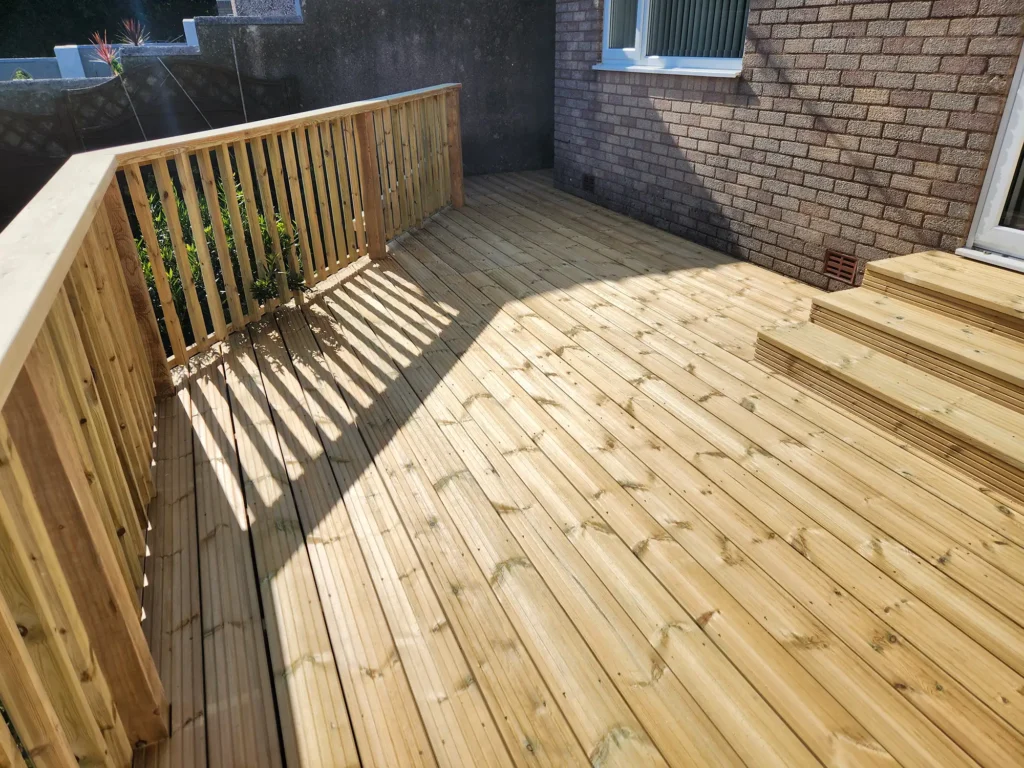
Raised decking needs careful planning and proper construction. Support posts must be correctly spaced and anchored, and steps should be comfortable to use, not steep or awkward.
Good design ensures the deck feels stable underfoot and safe for everyone using it, including children and pets. When built correctly, a raised deck feels just as solid as ground level decking, if not more so.
Blending Raised Decking into the Garden
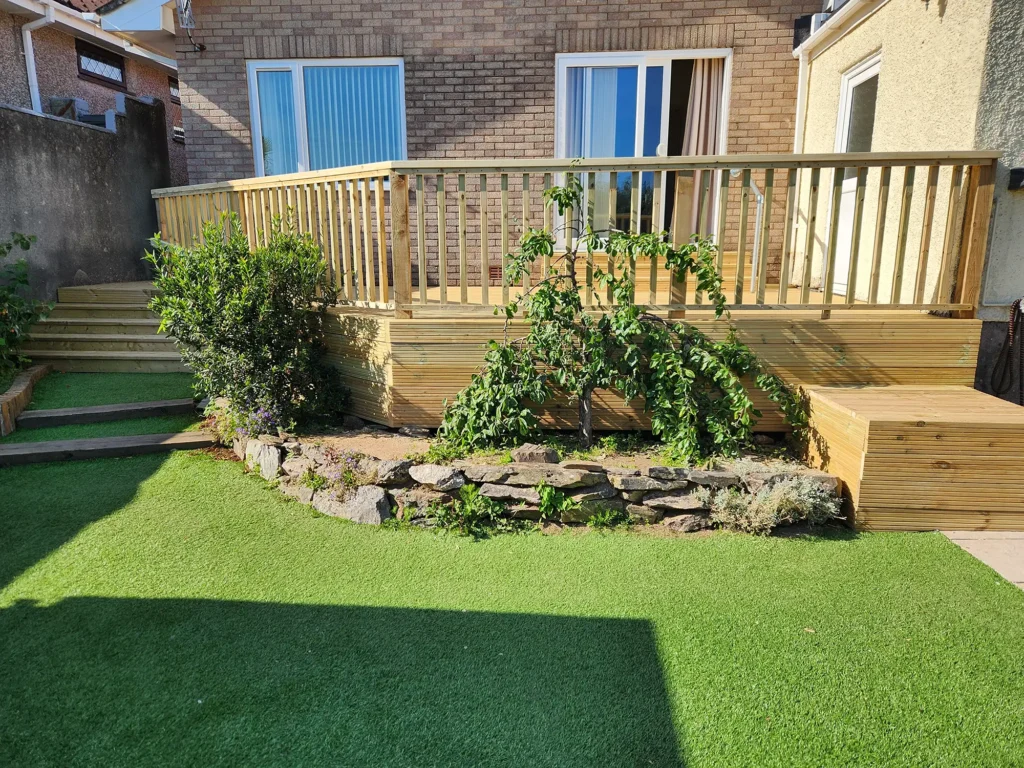
The best raised decks do not feel imposed on the garden. They flow naturally into planting, lawns, or paths.
Softening edges with planters, sleepers, or borders helps the deck sit comfortably within the space. Changes in height become a feature rather than something to hide.
Lighting can also play a role, subtly highlighting steps and edges while making the deck usable in the evening.
Is Raised Decking Right for Your Garden?
If your garden slopes, feels uneven, or has areas that never quite work, raised decking is almost always worth considering.
It creates level space, improves access, and transforms problem areas into something genuinely useful. More importantly, it allows you to enjoy your garden without constantly working around its limitations.
With the right design and build, a sloping garden can become the most interesting and enjoyable part of your home.