
Small gardens often get written off as limited, but in reality they just demand better decisions. In terraced and compact homes especially, decking can completely change how a garden feels and how often it gets used.
The key is not trying to do too much. Good small garden decking is about clarity, flow, and making every square metre earn its place.
Start With How You Actually Use the Space
Before thinking about shapes or materials, it helps to be honest about how the garden fits into your daily life.
Is it somewhere you sit with a coffee in the morning? A space for evening meals? Somewhere children play? When the purpose is clear, the deck naturally falls into the right size and position.
Trying to squeeze dining, lounging, storage, and planting into a tiny footprint usually leads to clutter. A single, well defined use almost always works better.

Keep Decking Levels Low
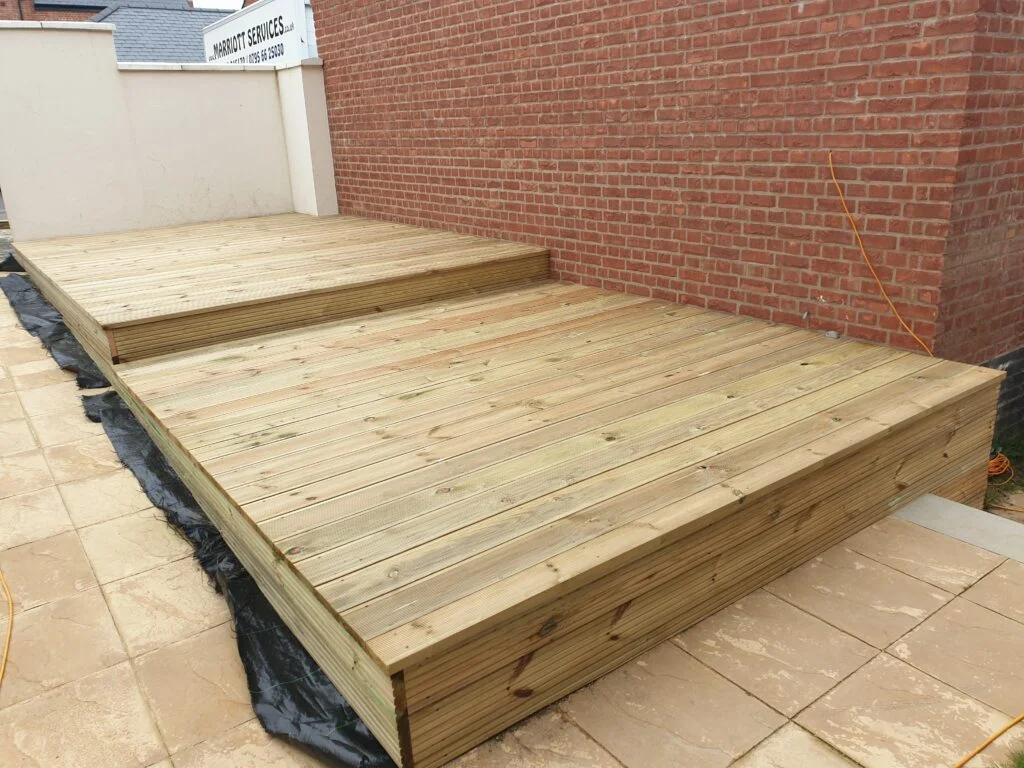
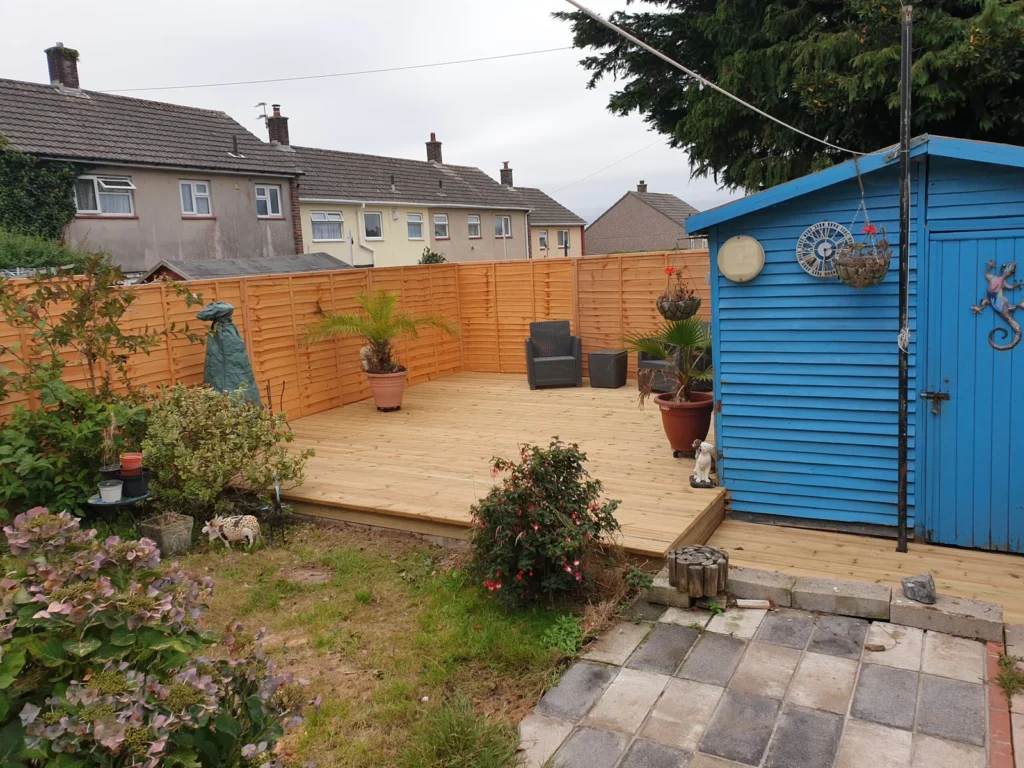
In compact gardens, raised decking can quickly feel dominant. Where possible, keeping the deck close to ground level helps maintain a sense of openness and avoids chopping the garden into awkward sections.
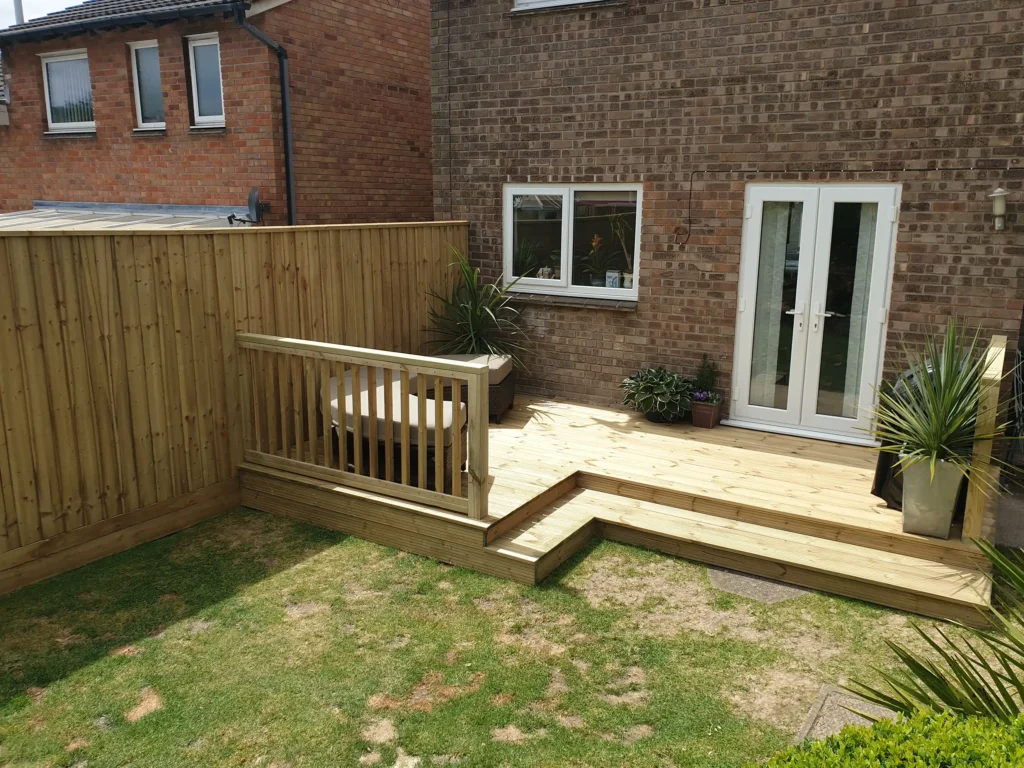
Low level decking also creates a smoother transition from the house into the garden, making the space feel larger than it actually is. Steps are kept to a minimum, which improves flow and usability.
If height is needed, subtle changes work better than dramatic drops.
Read more about raised decking ideas in our blog
Use Clean Shapes to Open the Space
Simple layouts are your best friend in small gardens.
Straight edges and clean lines draw the eye outward, making the garden feel longer or wider depending on board direction. In narrow gardens, running boards lengthways can visually stretch the space. In squarer gardens, horizontal lines can create balance.
Complex curves and multiple angles tend to break the space up and make it feel busy.
Built In Seating Beats Loose Furniture
Free standing furniture eats up valuable floor space. Built in seating around the edge of a deck keeps the centre clear and gives the garden a calmer feel.
Bench seating can also double as storage, which is invaluable in terraced homes where sheds or side access may be limited. Keeping furniture integrated into the structure helps the deck feel intentional rather than squeezed in.
Choose Materials That Reflect Light
Light plays a huge role in how small gardens feel.
Darker decking absorbs light and can make compact spaces feel enclosed, especially in north facing gardens. Lighter timber tones or modern composite finishes help bounce light around and lift the overall feel.
This does not mean everything has to be pale. Contrast can still work, but it should be deliberate rather than accidental.
Reaf more about Wooden Decking vs Composite Decking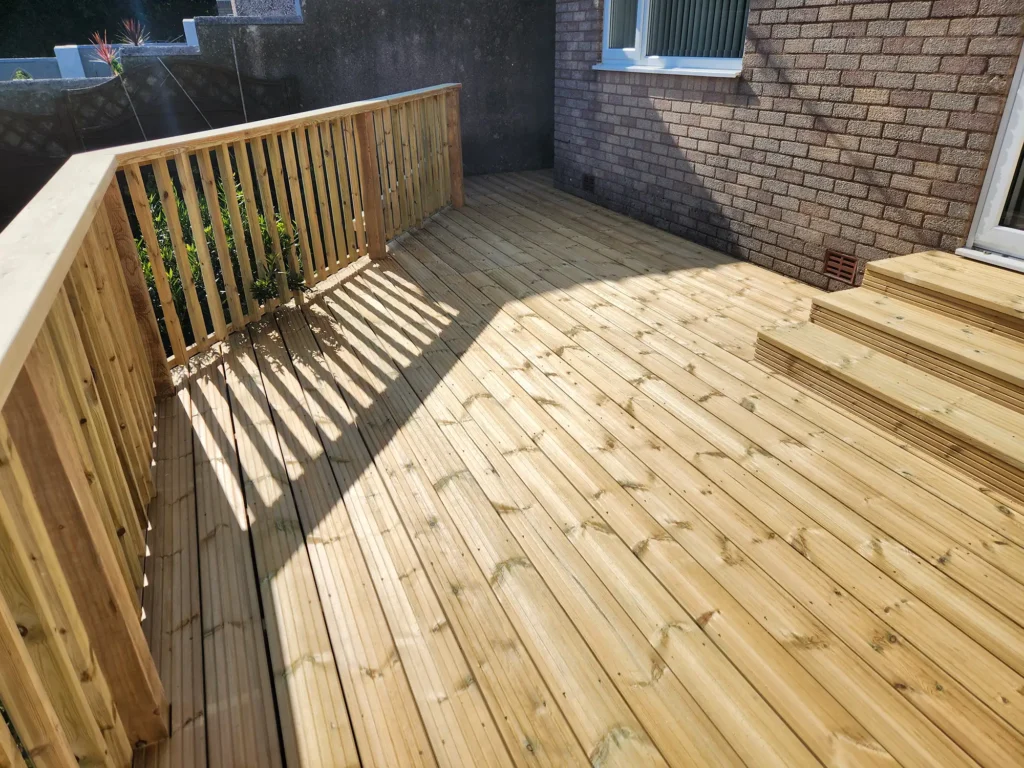
Avoid Visual Clutter at the Edges
In small gardens, the edges matter just as much as the centre.
Chunky balustrades, heavy planters, or oversized borders can close the space in. Keeping edges clean and low allows the eye to travel further, making the garden feel more open.
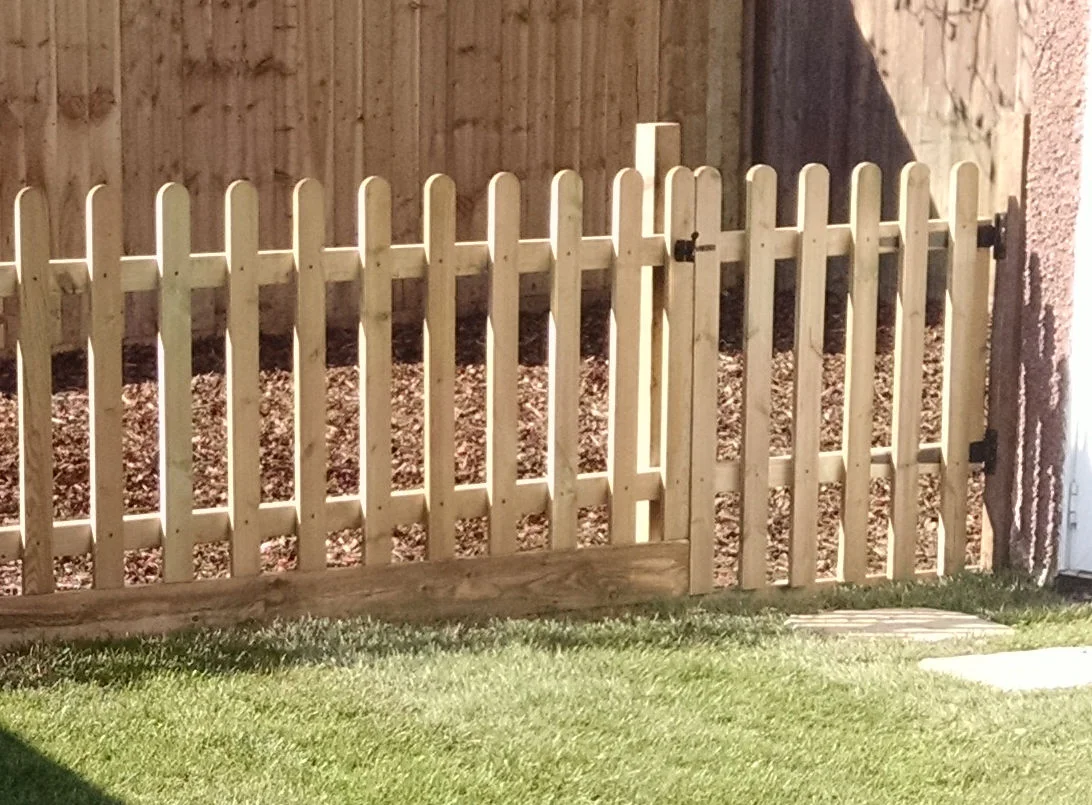
Where privacy is needed, slim fencing or trellis paired with planting offers screening without bulk.

Decking as a Connector, Not a Feature
The best small garden decks do not shout for attention. They quietly connect the house to the garden and support how the space is used.
When decking is treated as the foundation rather than the feature, everything else starts to work better. Plants sit more naturally, furniture feels less forced, and the garden becomes easier to enjoy day to day.
Is Decking Right for Your Small Garden?
For terraced and compact homes, decking often makes more sense than paving or lawn. It is quicker to install, more forgiving on uneven ground, and easier to design around awkward shapes.
When planned properly, a small deck can make a garden feel calmer, larger, and far more usable. It is not about adding more. It is about making better use of what you already have.
If your garden feels tight or underused, decking could be the simplest way to unlock its potential.

