For many households, the dream garden is not about perfection. It is about ease. Somewhere you can step into without thinking about constant cleaning, staining, or repairs. If weekends are already busy enough, decking should simplify life, not add another job to the list.
Low maintenance decking is less about shortcuts and more about smart choices at the planning stage.
Start With the Right Mindset
The biggest mistake people make is assuming low maintenance means no maintenance at all. In reality, it means choosing materials and designs that stay looking good with minimal effort.
A deck that drains well, dries quickly, and resists wear will always outperform one that looks great on day one but needs constant attention to keep it that way.
Composite Decking for Everyday Living
Composite decking is often the first option people consider when maintenance is a concern, and for good reason.
It does not need staining or painting, it resists rot, and it holds its colour far better than traditional timber. For families with children, pets, or regular foot traffic, composite decking offers consistency and durability without regular upkeep.
Modern composite boards have also come a long way in terms of appearance. Many now mimic the texture and tone of natural wood closely enough that most people would not notice the difference at a glance.
Timber Decking With Smarter Design
Timber can still work well for busy households if it is designed properly.
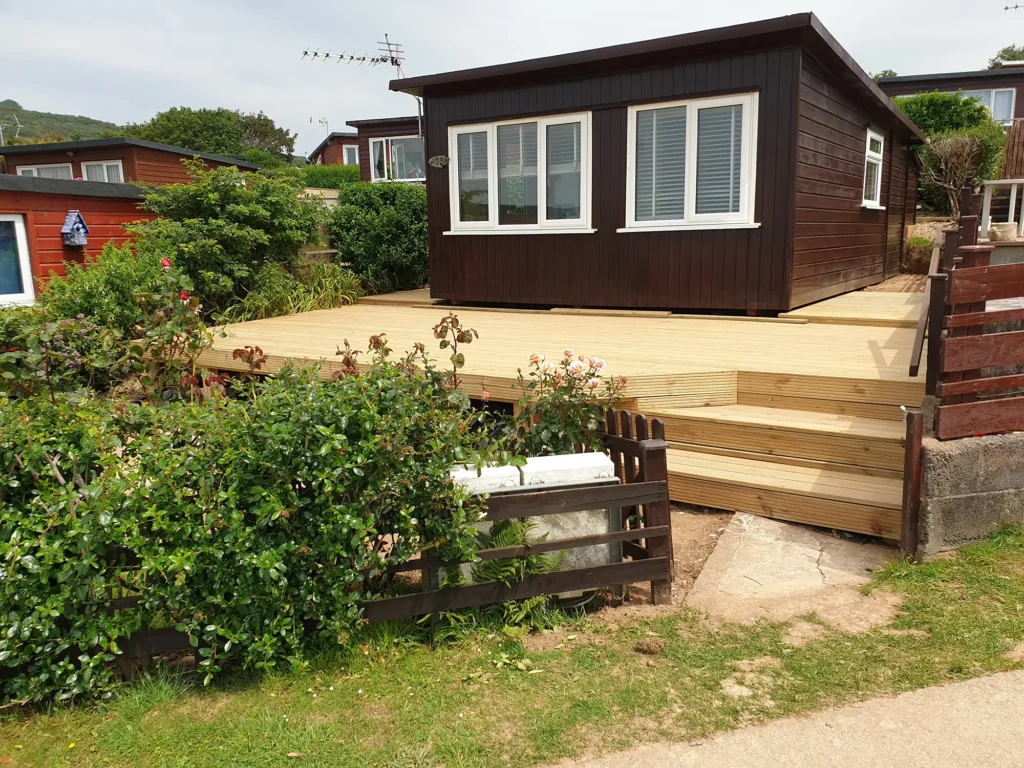
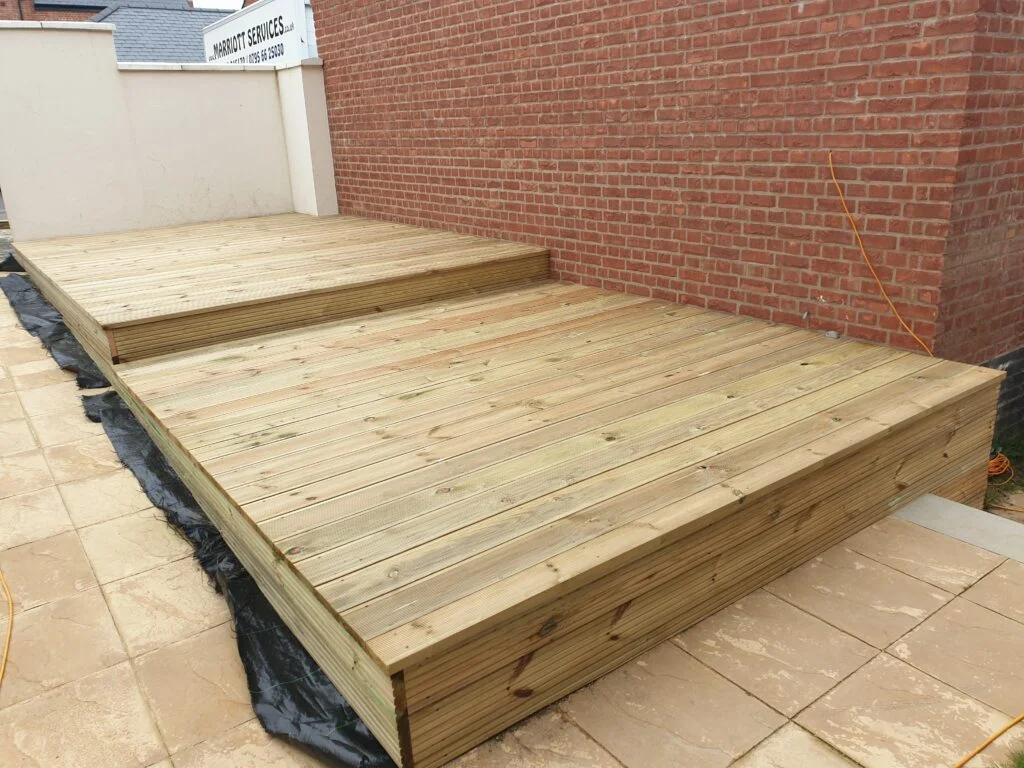
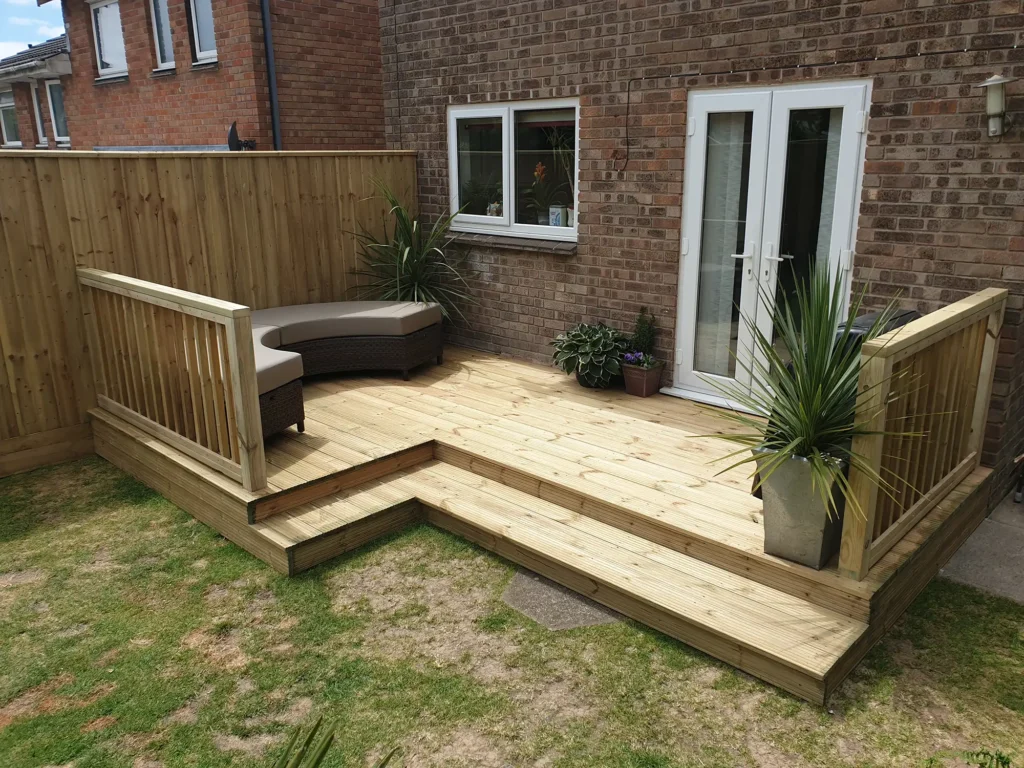
Choosing pressure treated boards, allowing for proper airflow underneath, and avoiding areas where leaves and debris collect all make a big difference. Smooth layouts with fewer joins are easier to clean, and raised decks dry faster than those laid directly on the ground.
While timber does require occasional treatment, thoughtful design can reduce how often it needs attention and extend its lifespan considerably.

Let Drainage Do the Hard Work
Poor drainage is one of the main reasons decking becomes slippery or discoloured.
Slight gaps between boards allow water to escape instead of pooling. A well built subframe keeps the deck lifted and ventilated, helping it dry quickly after rain.
This not only reduces cleaning time but also improves safety, especially in households with children or older family members.

Keep the Layout Simple
Complex designs look impressive but often demand more upkeep.
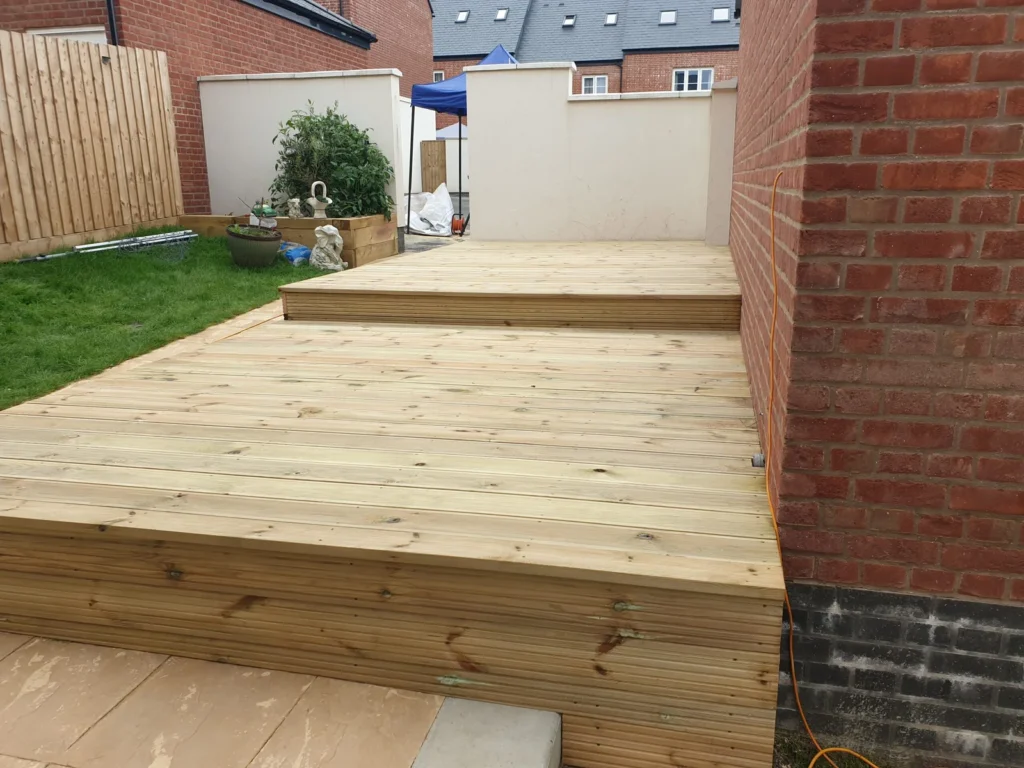
Straight runs of boards, clean edges, and minimal cutouts mean fewer places for dirt, moss, and debris to settle. Simple steps and clear transitions are easier to sweep or rinse down when needed.
Low maintenance decking benefits from restraint. The fewer awkward corners, the easier it is to live with.
Think About Surroundings
What sits around the deck matters just as much as the deck itself.
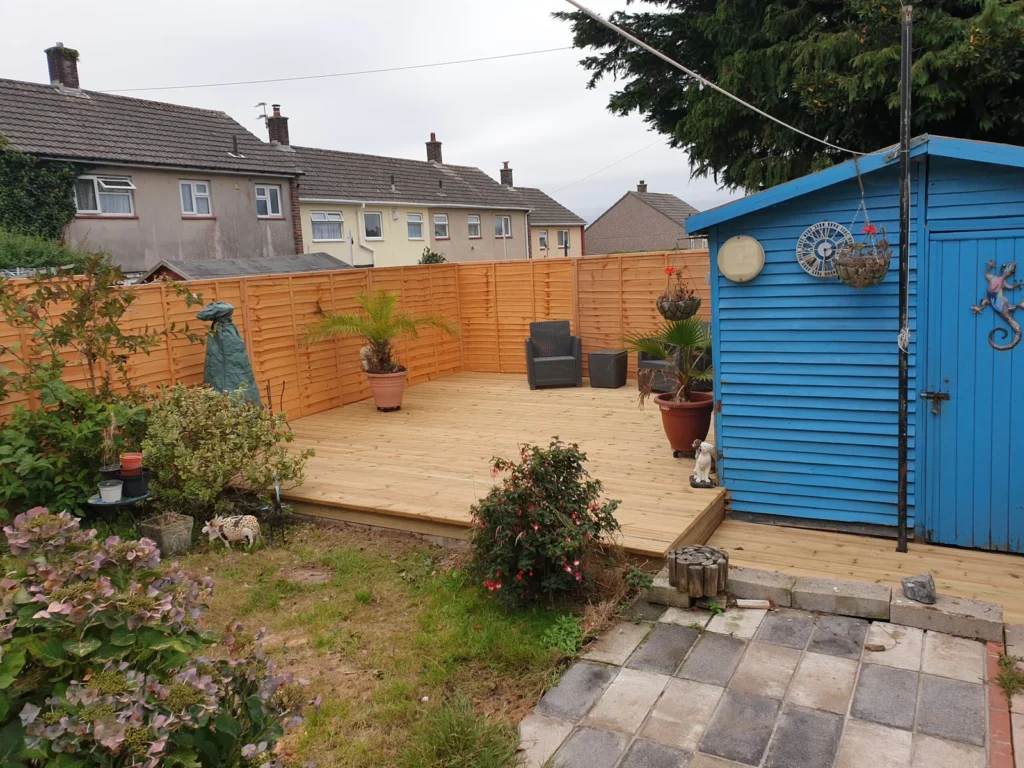
Trees that drop sap or leaves, overhanging shrubs, and poorly positioned planters can all increase maintenance. Keeping planting slightly set back from the decking edge reduces staining and organic buildup.
Lighting and seating built into the structure also reduce the need for moving parts that need cleaning or storage.
A Deck That Fits Your Routine
The best low maintenance decks are designed around real routines.
If you want somewhere for quick meals outside, keep access direct and surfaces easy to wipe down. If the deck is for relaxing in the evening, focus on comfort and durability rather than decorative extras.
When the deck matches how you actually use your garden, maintenance naturally becomes less of a chore.
Is Low Maintenance Decking Worth It?
For busy households, the answer is usually yes.
Spending a little more time planning or choosing the right materials upfront can save years of effort later. The result is a garden space that stays inviting without demanding constant work.
Low maintenance decking is not about cutting corners. It is about building something that fits into everyday life with ease.