Decking
Fencing
Gates

Choosing a garden fence is about more than looks. In most UK gardens, the “right” fence comes down to privacy, wind exposure, maintenance, and budget. Some styles are better for shelter and security. Others suit front gardens where you want a lighter, more open feel.
Below is a straightforward guide to the most common garden fencing types in the UK, plus when each one tends to work best.
Get your free quote
Need privacy (overlooked garden)? Closeboard or featheredge is usually the strongest choice.
Need a lower cost option? Overlap panels are often the entry-level route.
Want something decorative or open? Picket or trellis panels work well.
Want low maintenance? Composite fencing can suit homeowners who don’t want regular painting or staining.
Very windy location? Strong posts and a well-fixed closeboard build matter more than the panel type.
Overlap fencing is one of the most common fence panel types in the UK. The boards overlap slightly, which helps shed rain.
Best for:
Standard garden boundaries
Quick, cost-effective replacement
Straight runs with decent shelter
Things to know:
Often less rigid than closeboard in strong winds
Lifespan depends heavily on frame quality and how it’s installed
Can look tired quicker if the panels take repeated weathering
Overlap panels can be a practical choice where budget matters, but they do benefit from good posts, fixings, and a solid base detail.
Closeboard fencing uses vertical boards fixed to rails, typically supported by strong posts. It’s a popular choice for homeowners who want a sturdier, more private fence line.
Best for:
Privacy
Security
Exposed or windy gardens
Long runs where strength matters
Why it’s stronger:
More robust construction than many panel systems
Easier to reinforce where needed (posts, rails, fixings)
Closeboard is often the best “all-rounder” if you want a fence that feels solid and holds up well in typical UK weather.
Featheredge refers to the tapered vertical boards commonly used in closeboard builds. It’s often chosen for a traditional, high-privacy finish.
Best for:
A classic look with strong privacy
Properties that get wind and driving rain
Fence lines where you want durability over time
Because it’s typically built on site, featheredge fencing can be more adaptable to awkward boundaries, slopes, or changes in height.
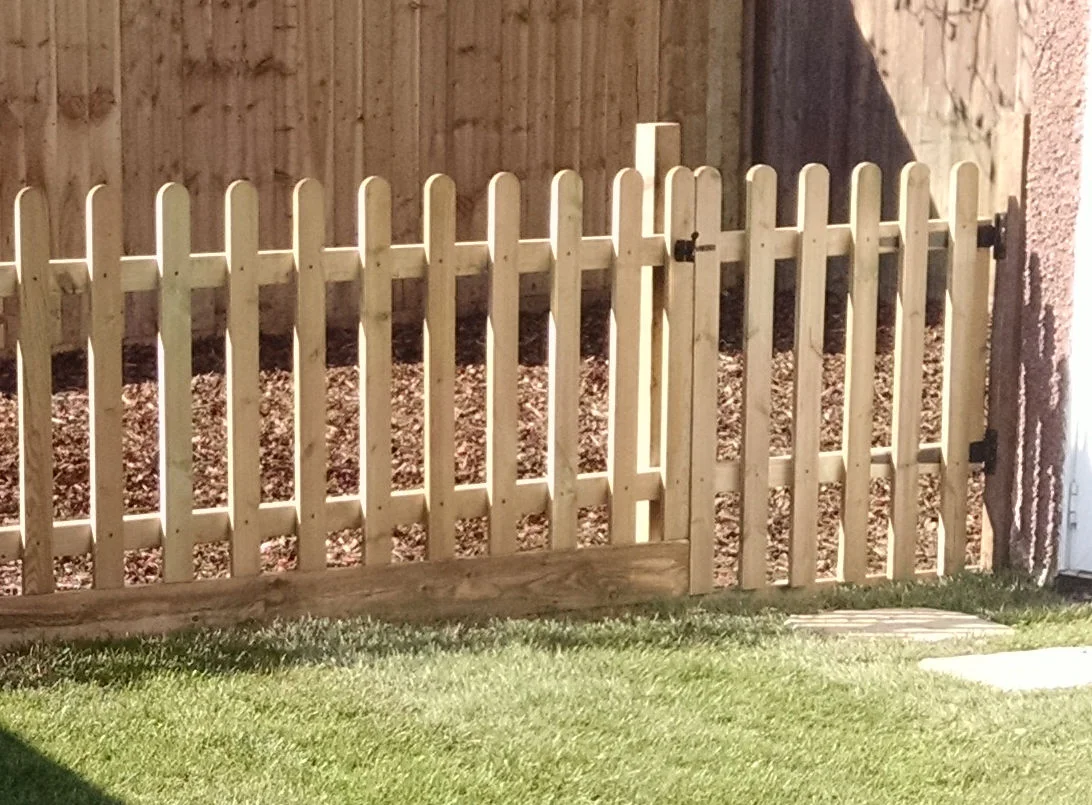
Picket fencing is lower and more open, usually with evenly spaced vertical slats.
Best for:
Front gardens
Decorative boundaries
Defining spaces without blocking light
Things to know:
Not designed for full privacy
Can still be very effective when paired with planting
Picket fencing is often chosen for kerb appeal, especially where you want a neat, friendly boundary rather than a visual block.
Trellis can be used on its own (as a decorative divider) or added on top of a solid fence to increase height while keeping a lighter look.
Best for:
Creating height without feeling boxed in
Supporting climbing plants
Dividing areas of a garden
Things to consider:
In windy areas, trellis needs proper framing and secure fixing
Plant growth adds weight over time, so support matters
Trellis is a good option where you want privacy at eye level but don’t want a fully solid wall effect.
Composite fencing is designed to give a consistent, modern finish with minimal maintenance. Panels or boards typically slot into posts as part of a system.
Best for:
Homeowners who don’t want to paint or stain
Contemporary gardens
A uniform look (colour stays consistent)
Things to know:
Upfront cost is usually higher than basic timber panels
Works best when installed as a complete, matched system
Still needs occasional cleaning in shaded or damp spots
Composite fencing can be a strong choice if you want a “clean” look and less upkeep year to year.
Go for taller solid fencing, typically closeboard or featheredge.
Consider trellis tops if you want height without a heavy feel.
Strength comes from the full build: posts, fixings, rails, and how it’s anchored.
Closeboard or a reinforced system usually performs best.
Lower styles like picket can look smarter and keep things open.
Some areas also suit a lower fence combined with planting.
Composite can reduce ongoing work.
Timber can still be manageable with periodic treatment, but it’s a commitment.
Whatever style you choose, fences tend to fail at the same points:
weak or rotted posts
poor fixings
panels sitting too close to the ground
trapped moisture at the base
Using proper posts, keeping timber out of ground contact where possible, and fitting gravel boards in the right situations can make a big difference to how long a fence lasts.
Overlap panels and closeboard fencing are among the most common. Overlap is usually the budget option; closeboard is stronger and more wind resistant.
Closeboard or featheredge fencing is usually best for privacy, especially in overlooked gardens.
A well-built closeboard fence with strong posts and correct fixings tends to perform better than lightweight panels in exposed areas.
Composite is generally lower maintenance and more consistent in finish. Timber is often cheaper upfront and easier to customise, but typically needs more upkeep over time.