Decking
Fencing
Gates

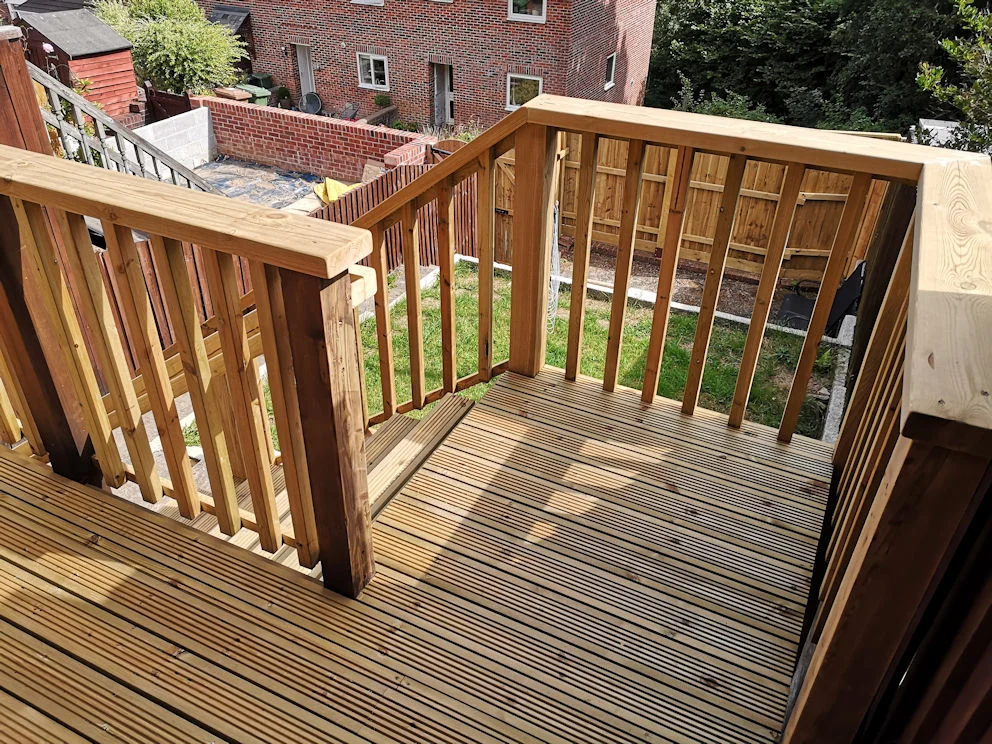
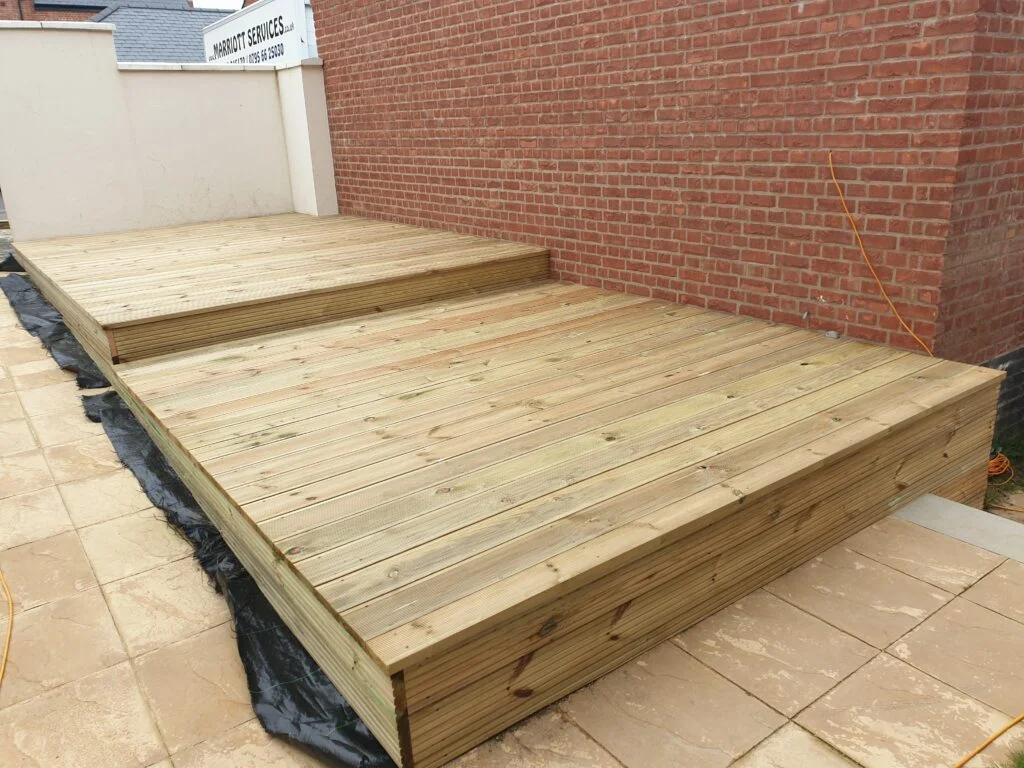
If you’re planning a new deck in the UK, the first big decision is usually timber or composite decking. Both are popular. Both can look great. But they suit different types of gardens and different types of homeowners.
This guide explains the real differences — cost, maintenance, lifespan, appearance and performance in British weather — so you can decide what fits your home.
Get your free quoteTimber decking is made from natural wood boards, typically:
Pressure-treated softwood (most common in the UK)
Hardwood such as oak or balau
Softwood is more affordable and widely used in domestic gardens. Hardwood is denser and longer lasting, but significantly more expensive.
Natural, traditional appearance
Can be painted, stained or oiled in different colours
Lower upfront cost per square metre
Easy to repair individual boards
Timber is affected by:
Rain and damp UK conditions
Algae growth in shaded gardens
UV fading
Splitting and warping over time
To keep it looking good, timber decking usually needs:
Annual cleaning
Re-treatment every 1–3 years
Occasional board replacement
If you’re happy with light seasonal maintenance, timber remains a strong option.
Composite decking boards are made from a blend of:
Wood fibres
Recycled plastics
Binding agents
Often a protective polymer cap (capped composite)
They are engineered to replicate the look of timber, but with improved durability.
Resistant to rot and insect attack
No painting or staining required
Reduced splintering
Often slip-resistant textured surfaces
Long manufacturer warranties (sometimes 15–25 years)
Higher upfront cost
Cannot be repainted or restyled later
Colour is fixed at purchase
Requires correct installation spacing
Composite is popular with homeowners who prefer a “fit and forget” solution.
| Feature | Timber Decking | Composite Decking |
|---|---|---|
| Upfront Cost | Lower | Higher |
| Maintenance Cost | Ongoing | Minimal |
| Lifespan | 10–15+ years (with care) | 20–30+ years (product dependent) |
| Repairs | Easy board replacement | More system specific |
| Appearance | Natural grain | Uniform, modern finish |
While timber is cheaper initially, composite can become comparable over 15–20 years when maintenance products and labour are factored in.
In Plymouth and coastal areas, salt air, wind and damp conditions matter.
Timber requires consistent care in exposed locations.
Composite generally handles moisture better.
Slip resistance depends on board texture, not just material.
The right subframe and ventilation are just as important as the board type.
For homeowners who want minimal maintenance and long warranties, yes. If you’re happy maintaining timber, it can still be cost-effective.
Yes — when properly installed and treated. Poor installation shortens lifespan more than the material itself.
Both can improve appeal. Buyers often like low-maintenance options, but good workmanship matters more than material.