
Decking in Plymouth
Garden Decking in Plymouth
We're a small family business building timber and composite decks for homes across Plymouth. Plymouth gardens are rarely flat, so a lot of our decks start with a slope, a damp lawn or a scrappy corner, and finish as somewhere level to sit.
Free quotes, no obligation.
Timber decking
Somewhere Level to Sit
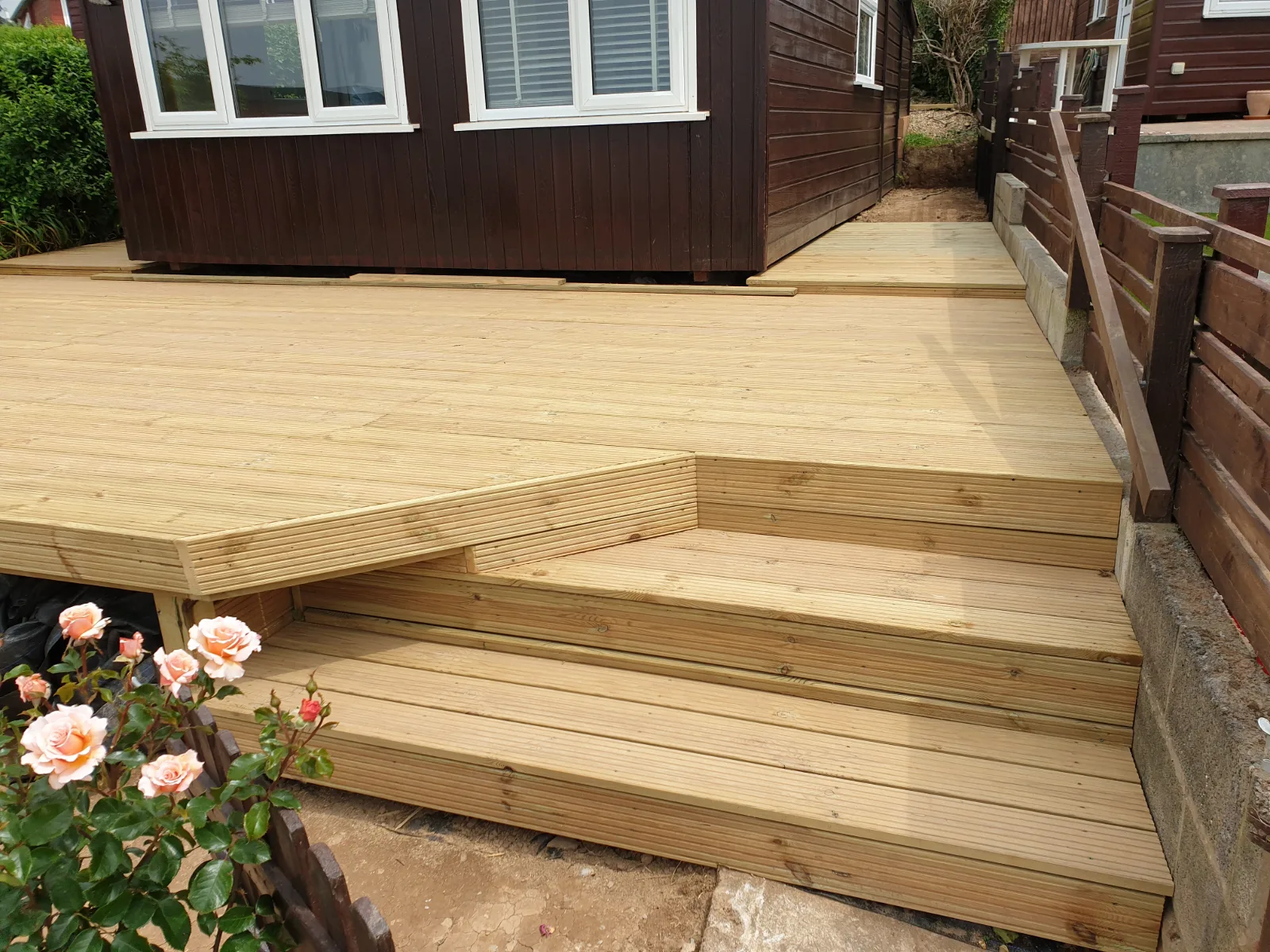
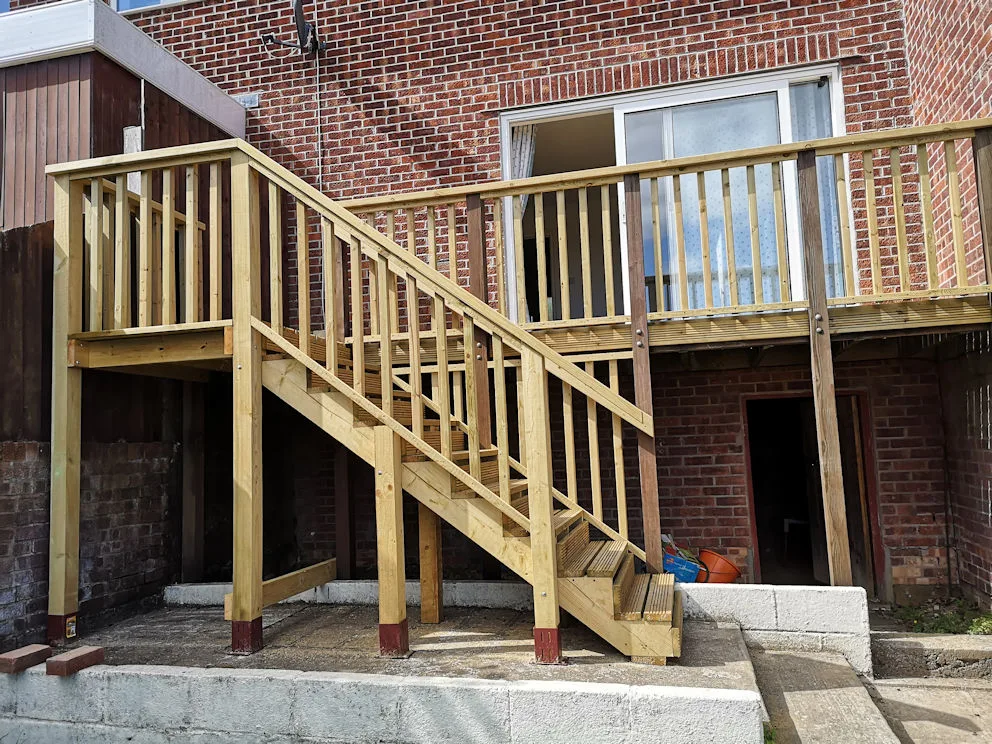
Plymouth gardens are rarely flat. A timber deck turns a slope, a damp lawn or a scrappy corner into usable space. We build low decks off the back door, raised decks with stairs, and decks on more than one level.
Pressure treated timber frame and boards
Weed membrane laid underneath
Steps, stairs, handrails and balustrades
Raised and split level decks
Composite decking
A Composite Deck Requires Less Maintenance
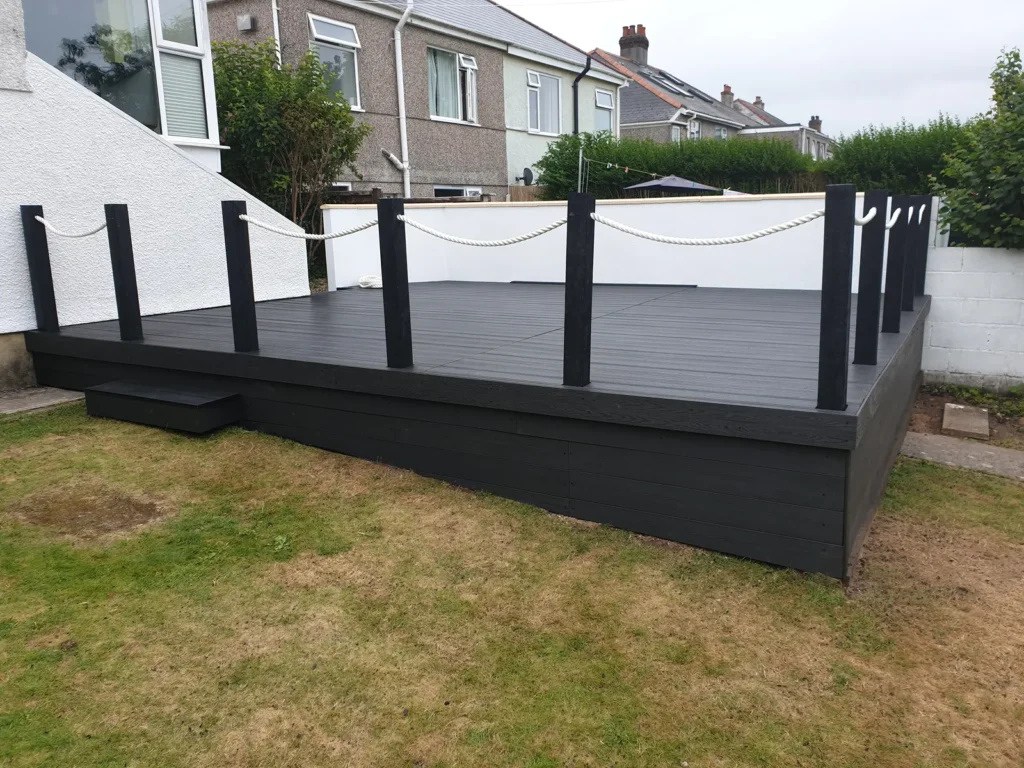
Composite boards are made from wood fibre and plastic. They don't rot, splinter or need staining, and they don't go green and slippery in a wet winter. They cost more than timber to start with, then very little after that.
Choice of board colours, including charcoal grey
No sanding, staining or oiling
Safe for bare feet and children
Rope, timber or matching balustrades
Wood or composite?
Choosing Your Decking
Both last well when they're built on a sound frame. The choice usually comes down to budget and how much upkeep you want.
Timber
Lower cost to build
Natural wood look that weathers over time
Needs a clean and a coat of treatment every year or two
Composite
Costs more up front
Colour stays even for years
Wash it down with soapy water and that's it
Building a raised deck? Decks more than 30cm above the ground usually need planning permission. Find out what the old 4-year rule means and why it is now usually 10 years.
Before and after
The Bit of Garden You Never Use
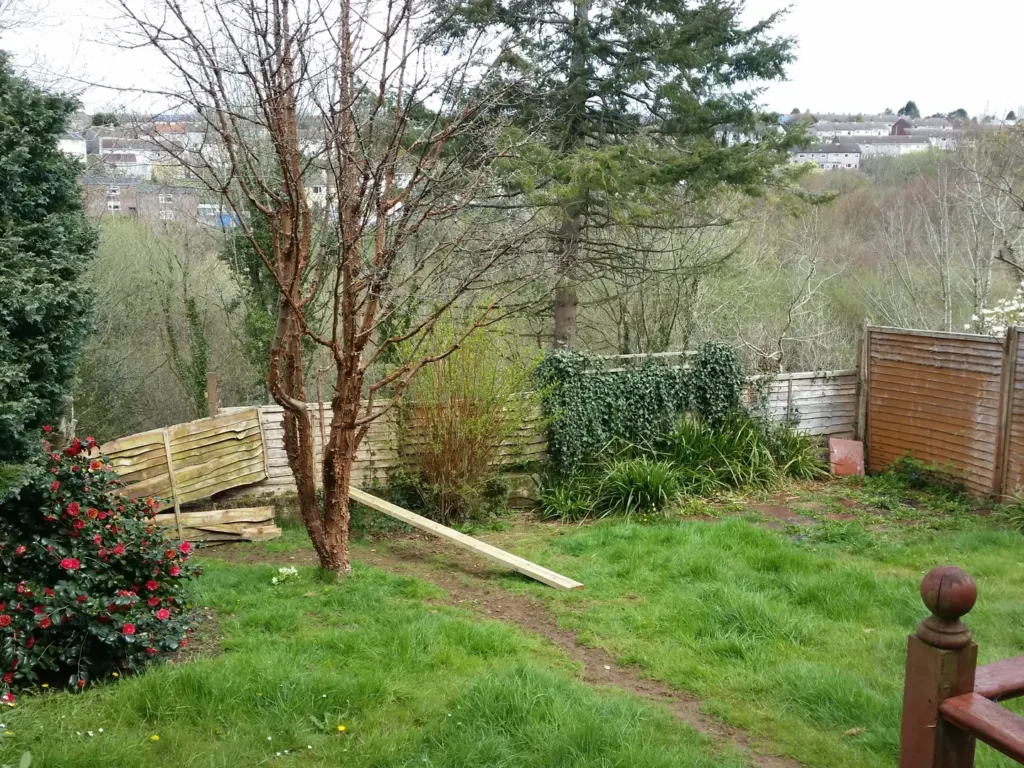
A lot of our decking jobs start with a slope, a patch of rough grass or an old deck gone soft.
This garden was an uneven, overgrown corner, with broken fence panels.
Now it's level, secure and somewhere to put a table.
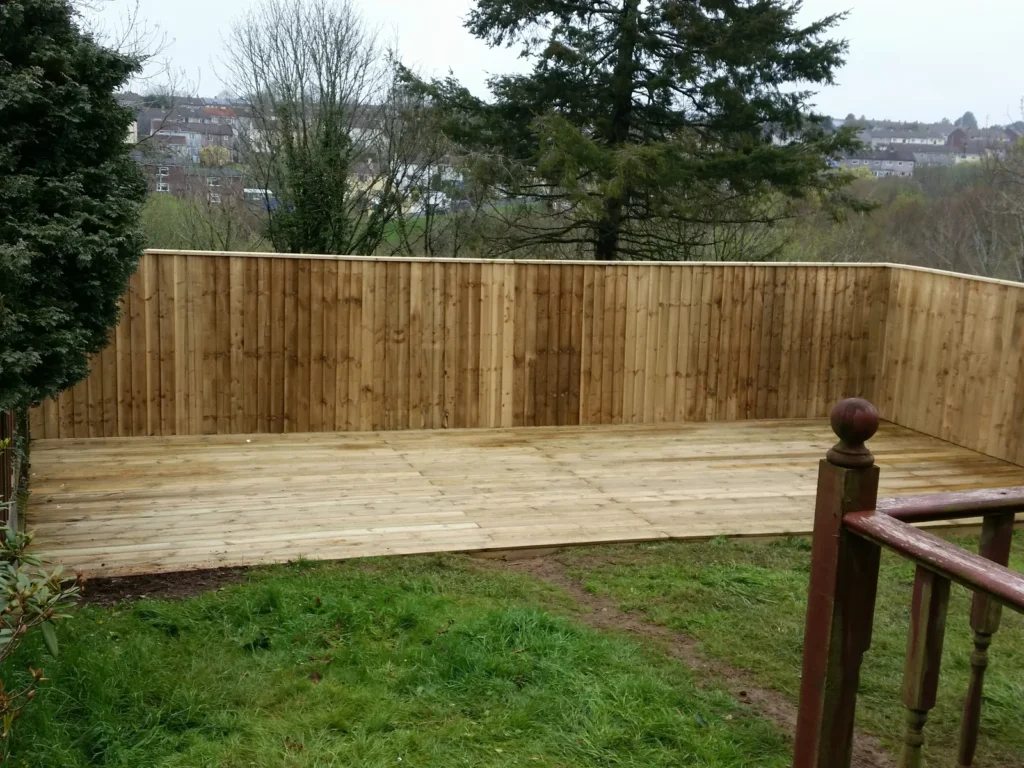
Recent decking jobs
Decks We Have Built Around Plymouth
Before and after photos from real jobs in Plympton, Southway, Bere Alston and Plymstock. Tap a photo to see the whole job.
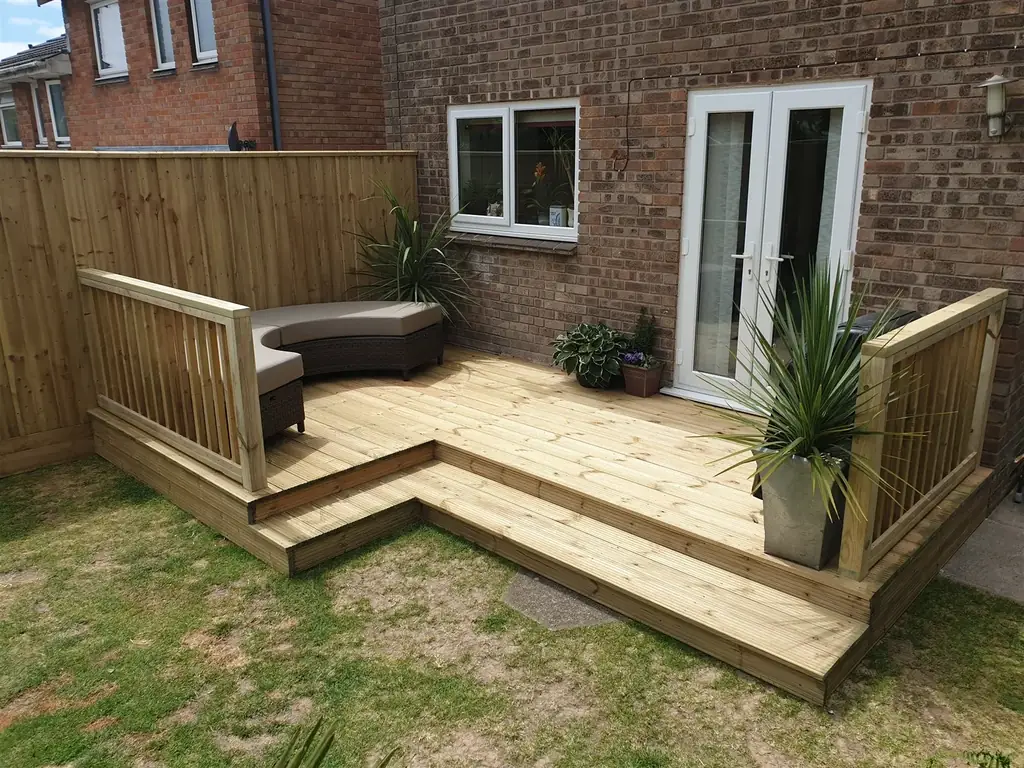
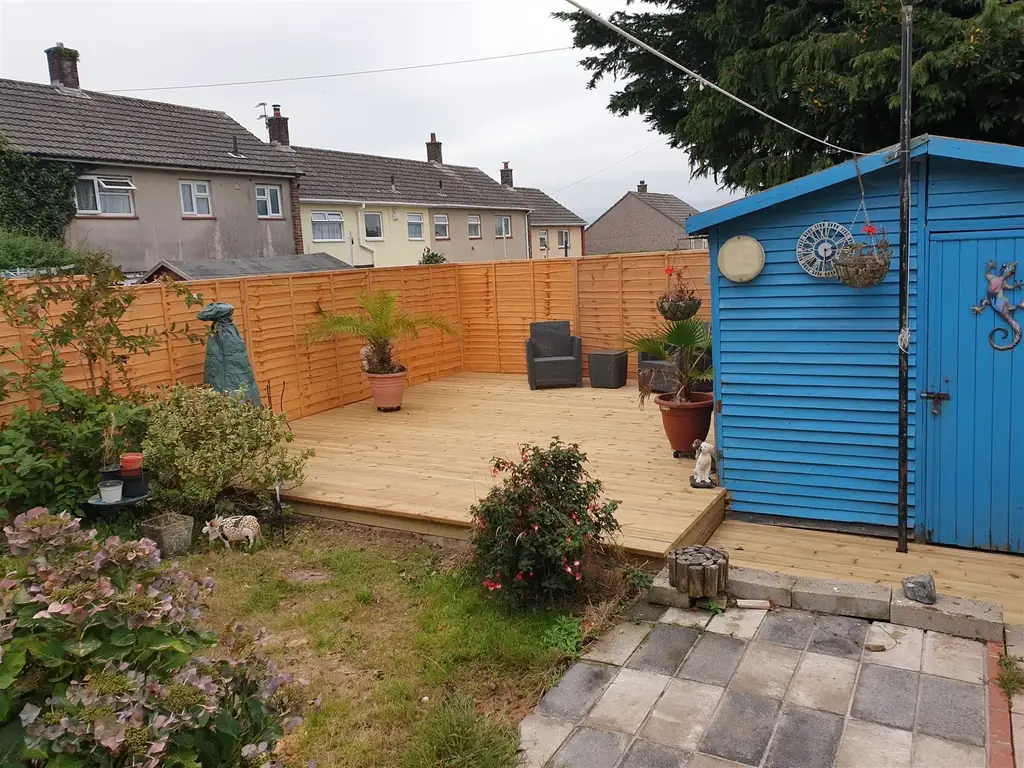
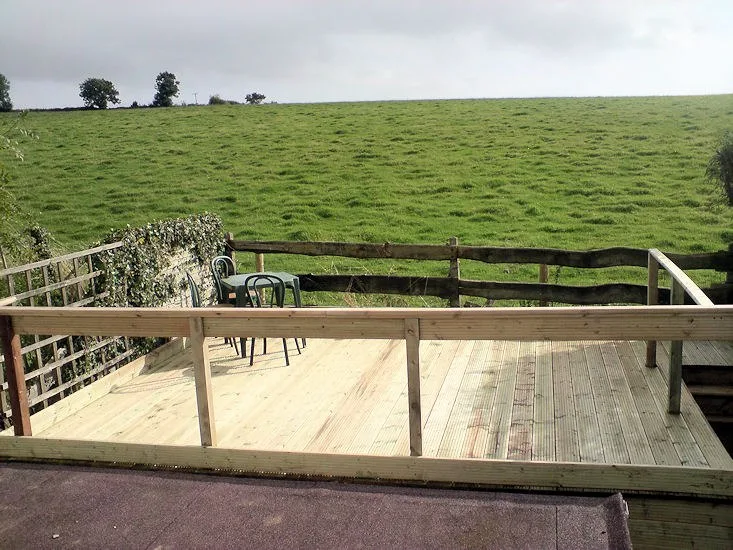
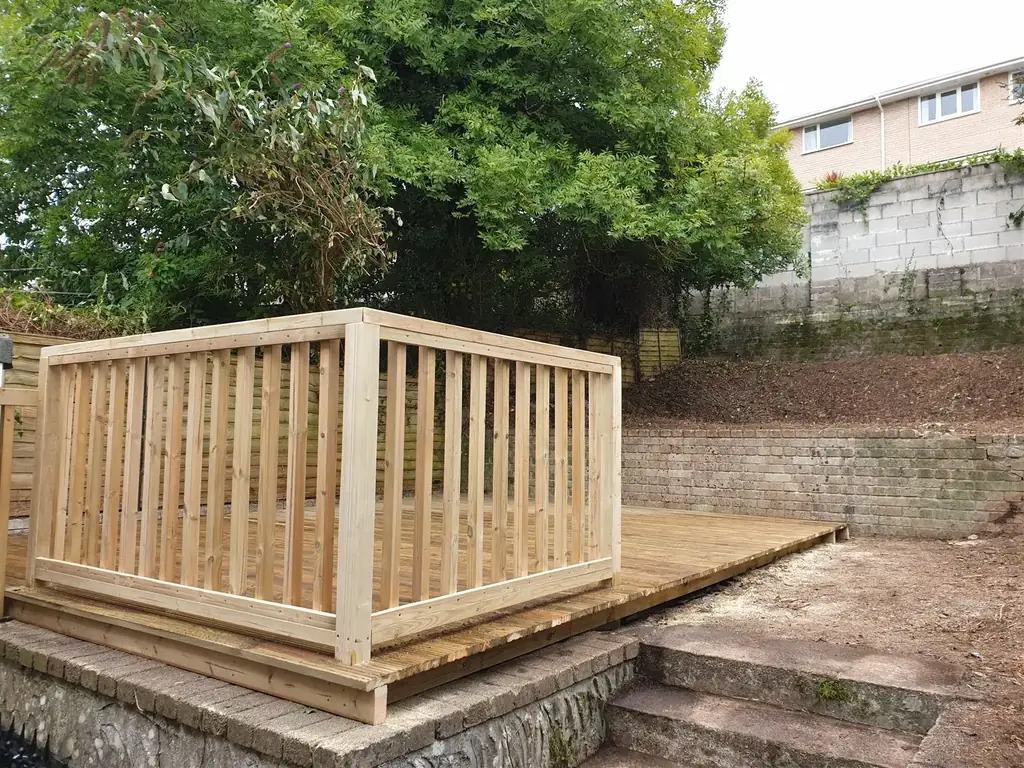
We had a complex space that needed a raised deck, Patrick built exactly what we needed and his work was excellent. Patrick was extremely tidy, reliable and polite.
Patrick and co did a fantastic job, building a seating area in decking for me. Plus a fence with gate out the front of my house. Very professional and value for money. Marriott Services were recommended to me by a colleague and I would certainly recommend them also.
Our garden needed a major tidy with large shrubs cutting down and all rubbish removed. They also built a small deck in the back garden. Excellent work - reliable and so clean and tidy. We were very pleased with the results. I would definitely use them again and I would definitely recommend Marriott Services unreservedly.
How it works
From First Call to Finished Job
We Come and Measure Up
Patrick visits, looks at the ground and the access, and talks through what you want from the space.
You Get a Clear Estimate
Patrick can talk you through the price, so you know exactly what you're paying for.
We Build It and Tidy Up
We take the old fence or deck away and leave your garden clean at the end of each day.
Common questions
Decking Questions
Do I need planning permission for a deck?
In England, decking up to 30cm above the ground is permitted development and needs no planning application, as long as it and any other extensions and outbuildings cover no more than half of the garden, and none of it is on land in front of the wall forming the front of the house. Extra limits apply in places such as National Parks and the grounds of listed buildings, and the rules do not cover flats. If you are unsure, ask your local planning authority.
Source: Planning Portal: Decking planning permission | See also: What is the 4-year rule for decking?
Do building regulations apply to decking?
The Planning Portal says building regulations should be assumed to apply to every deck structure that needs planning permission. If you are not sure whether your deck is covered, ask your local building control body before you start.
What is the difference between composite and timber decking?
Composite boards do not need sealing, staining or painting, they resist rot and damp, and they absorb very little water. Timber is cheaper to start with but is usually cleaned and oiled regularly to keep its colour and protect against moisture. Composite is installed a little differently, with closer joists and hidden clips.
Sources: Wickes: How to install composite decking | Kärcher: Cleaning wooden decking
How should the ground be prepared before building a deck?
On grass, soil or gravel, dig out about 50mm, lay landscaping weed control fabric and weigh it down with 10mm gravel or pea shingle. Paving stones set on the gravel and checked with a spirit level then support the joists. The aim is to keep the timber raised off damp ground so it does not rot.
Source: Wickes: How to lay decking
What is the best way to maintain a wooden deck?
Clean it in dry weather so the wood can dry thoroughly afterwards. Apply a wood cleaner, scrub in the direction of the grain, then rinse along the grain. Once the deck is completely dry, a wood oil helps retain colour, seal cracks and protect against moisture. You can skip the oil if your cleaner already protects the wood, as some 3-in-1 cleaners do.
Source: Kärcher: Cleaning wooden decking
How often should I clean my deck, and how do I deal with slippery moss?
Clean a wooden deck about twice a year, in spring and autumn, and only in dry weather so the wood can dry thoroughly. Remove moss straight away, because moisture trapped in it makes the surface slippery and is a fall risk. Light dirt and green growth often come off with a stiff brush, warm water and soap.
Source: Kärcher: Cleaning wooden decking
Thinking About a New Deck?
Tell us what you have in mind and roughly where you are. Free quotes, no obligation. We build decks across Plymouth, Ivybridge, Plympton, Plymstock, Saltash, Southway, Tavistock, Torpoint and Woolwell.